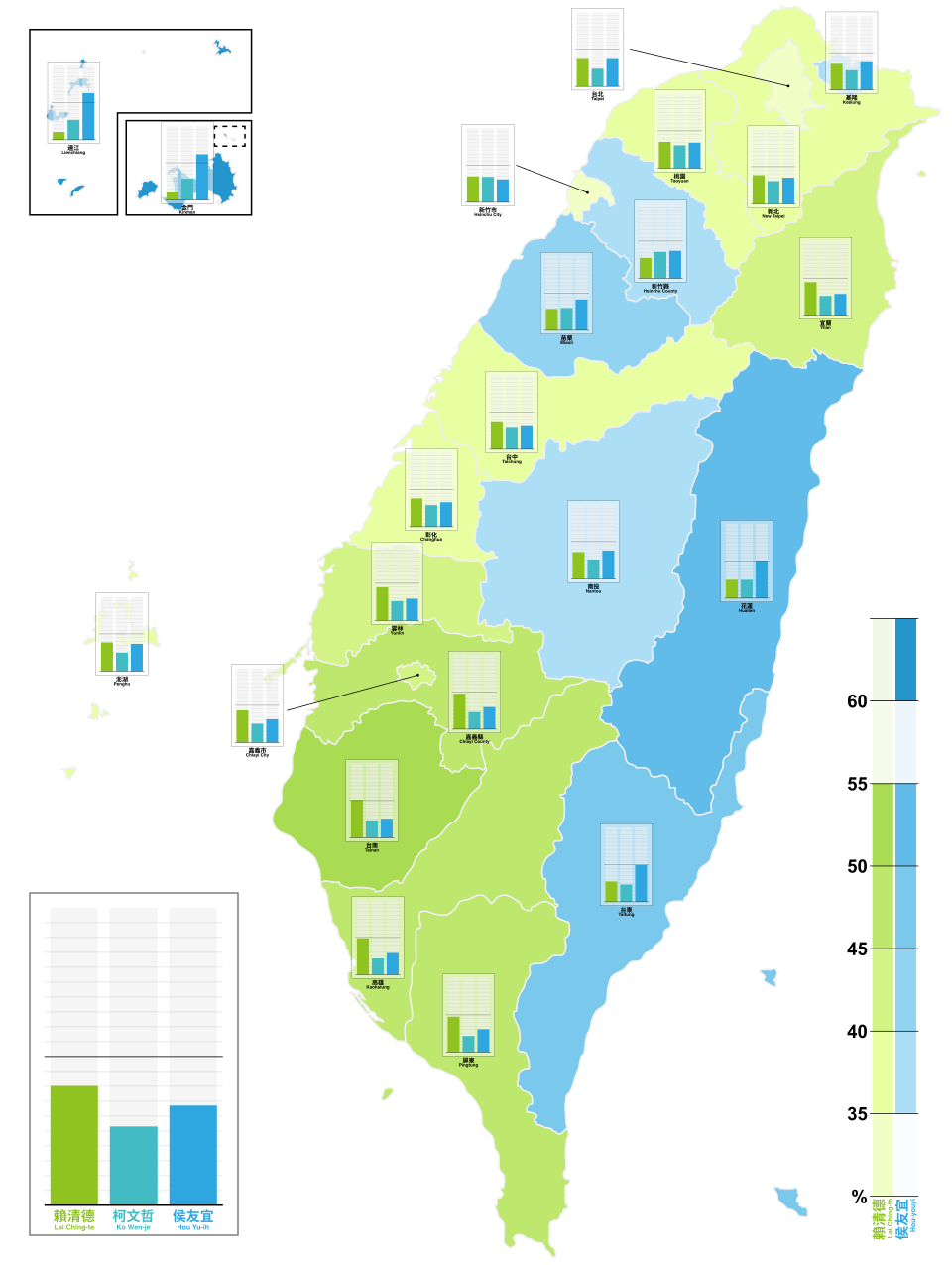
Taiwan Elections 2024: A Litmus Test for China Relations
The ballot boxes sealed on January 13, 2024, in Taiwan held more than just the political aspirations of its 23.6 million citizens. The outcome of these pivotal presidential elections reverberated far beyond the island's shores, sending ripples of anticipation and concern through the halls of power in Beijing and Washington D.C. More than a mere democratic exercise, this election served as a critical litmus test, potentially redefining the volatile dynamics of cross-strait relations and shaping the geopolitical landscape for years to come.
At its heart, the election wrestled with Taiwan's precarious status quo – a vibrant, self-governing democracy that Beijing claims as an integral part of its "One China" principle, destined for "reunification." The global community, particularly the United States, watched with bated breath, keenly aware that the results could either ease escalating tensions or propel the region towards an uncertain and potentially dangerous future.
Taiwan's Democratic Journey vs. China's "One China" Principle
To truly grasp the significance of the 2024 elections, one must appreciate Taiwan's remarkable transformation. From 1949 until 1987, the island was under martial law following the retreat of Chiang Kai-shek's Kuomintang (KMT) from mainland China. However, the lifting of martial law in 1987 marked a profound turning point, initiating Taiwan's rapid evolution into a robust and consolidated democracy. This journey involved comprehensive political and social reforms, alongside sustained economic growth, leading to multiple peaceful transitions of power through free and fair elections. Today, Taiwan operates as a de facto independent state, a beacon of democracy in East Asia.
This democratic reality stands in stark contrast to Beijing's unwavering assertion of "one China." Chinese President Xi Jinping has repeatedly reaffirmed that Taiwan "will surely be reunited" with the mainland, a declaration that increasingly carries implicit and explicit military undertones. This fundamental disagreement – Taiwan's right to self-determination versus Beijing's territorial claims – forms the bedrock of the cross-strait conundrum, making every election a high-stakes affair for regional and global stability.
The Contenders and Their Stance on China
The 2024 presidential race ultimately coalesced into a contest between three main candidates, each with distinct approaches to the crucial question of relations with mainland China:
- The Democratic Progressive Party (DPP): Represented by then-Vice President William Lai, the DPP champions Taiwan's sovereignty and de facto independence. Their platform largely aligns with maintaining the current status quo, resisting Beijing's demands for unification, and fostering closer ties with democratic allies like the United States. A DPP victory is often perceived in Beijing as a continued drift towards formal independence, potentially compelling Xi Jinping to intensify his "reunification" efforts, possibly even through force.
- The Opposition Parties (Kuomintang - KMT and Taiwan People's Party - TPP): The **Taiwan opposition** parties generally adopt a more conciliatory approach to **Chinesisch** relations, often advocating for renewed dialogue and more stable engagement with Beijing. While they do not support immediate unification under the PRC's terms, they typically acknowledge a broader "One China" framework, albeit with their own interpretation that emphasizes the Republic of China (Taiwan's official name) as the legitimate government. For instance, the KMT, historically, maintains a position that Taiwan and the mainland are part of "one China," but fundamentally disagrees with Beijing on who governs it. This nuanced stance suggests that an opposition victory might be seen by Beijing as an opportunity for more patient engagement, potentially slowing down any perceived timetable for military action. Their aim is often to reduce tensions and explore avenues for economic cooperation without compromising Taiwan's democratic way of life.
Understanding the nuances of the **Taiwan opposition's** stance on **Chinesisch** relations is crucial. It's not about advocating for unification, but rather about finding a modus vivendi that minimizes conflict and allows for pragmatic cooperation. This approach, however, faces its own challenges, as Beijing often seeks to leverage such dialogue to advance its long-term unification agenda.
Beijing's Pressure Tactics and Washington's Dilemma
In the lead-up to the election, Beijing left little doubt about its preferred outcome, deploying a series of overt and covert pressure tactics designed to influence Taiwanese voters. These included:
- Increased Military Drills: Intensified military exercises in and around the Taiwan Strait served as a clear warning, showcasing China's military capabilities and its readiness to use force. A notable incident involved China sending a series of balloons over the island, which Taiwan's government condemned as both a threat to air traffic and a blatant act of intimidation.
- Rhetorical Escalation: President Xi Jinping's annual New Year's address, stating "China will surely be reunified," underscored Beijing's determination, raising international fears about potential military action.
- Economic Coercion: China has also historically used economic levers, such as trade restrictions, to exert pressure on Taiwan.
Meanwhile, the outcome of the election also held significant implications for Washington. The United States maintains close, albeit unofficial, relations with Taiwan's current leadership, adhering to its "strategic ambiguity" policy while providing defensive capabilities to the island. However, recent tensions, exacerbated by events such as then-House Speaker Nancy Pelosi's visit to Taiwan in 2022, have heightened the specter of war. Beijing interpreted such actions as provocations, leading to intensified military threats in the strait.
Washington faces a profound dilemma: how to support Taiwan's democracy and defense without inadvertently triggering a conflict with China. The prospect of a "third regional war," following ongoing conflicts in Ukraine and Israel, weighs heavily on U.S. national security leadership. Questions arise about the U.S.'s capacity and political will to effectively respond to a Chinese aggression against Taiwan. For a deeper dive into the geopolitical calculations, consider exploring Taiwan's Vote: Unpacking China's Invasion Threat & US Role.
What the Future Holds: Scenarios and Implications
The results of the 2024 Taiwan elections undoubtedly set the stage for different scenarios in cross-strait relations:
- If the Independence-Oriented Party Remains in Power: A continued DPP presidency could be interpreted by Beijing as a rejection of its "One China" principle and a move towards permanent separation. This might lead Xi Jinping to feel he has no choice but to accelerate efforts to "force the issue," potentially through increased military pressure, diplomatic isolation, and economic sanctions. The risk of miscalculation or accidental escalation would remain high.
- If the Opposition Wins: A victory for the **Taiwan opposition** could signal to Beijing that more patience is viable. The **Chinesisch** leadership might see an opportunity for renewed dialogue and engagement, believing that a less confrontational Taiwanese government could eventually be swayed towards its unification goals, albeit without immediate military confrontation. This scenario might offer a temporary period of de-escalation, but the fundamental differences over sovereignty would persist. For a detailed look at how such an outcome could shift Beijing's strategies, refer to Taiwan Election: Opposition Win Shifts China's Strategy?
Regardless of the outcome, the election did not alter Beijing's long-term goal of "reunification." Instead, it influenced the perceived timeline and the tactics China might employ. For the global economy, especially the crucial semiconductor industry, any heightened instability in the Taiwan Strait carries significant implications, potentially disrupting global supply chains and impacting technological development worldwide.
Practical Insight: For international businesses and policymakers, monitoring the rhetoric and actions from all three parties – Taiwan's leadership, Beijing, and Washington – is paramount. Understanding these nuanced positions, particularly how the **Taiwan opposition** navigates its **Chinesisch** engagement, is key to anticipating regional shifts and mitigating potential risks.
Conclusion
The Taiwan Elections of 2024 were more than just a domestic political contest; they were a global flashpoint, a democratic expression with profound international repercussions. The outcome served as a critical indicator of the direction Taiwan intends to take in its relationship with China, a choice that has reverberated across geopolitical alliances and global markets. As Taiwan continues its democratic journey, the world watches, understanding that its fate is inextricably linked to the delicate balance of power in the Indo-Pacific, and the enduring question of how a vibrant democracy coexists with a determined authoritarian power.